Go Further.

Unlock the Full Potential of Sceptre Software with 3dB Labs Customer-Focused Open Enrollment Training Sessions

Tailored for government signal intelligence and analysis needs, 3dB Labs training sessions help you unlock the full potential of Sceptre software.

Learn directly from our experts to master Sceptre capabilities and amplify your operational success.

Who Should Attend

Training courses offered here are limited to government personnel only.

To ensure the security and relevance of our course offerings, an approved account and login is required prior to any course registration.
ELECTRONIC WARFARE & SIGNALS INTELLIGENCE

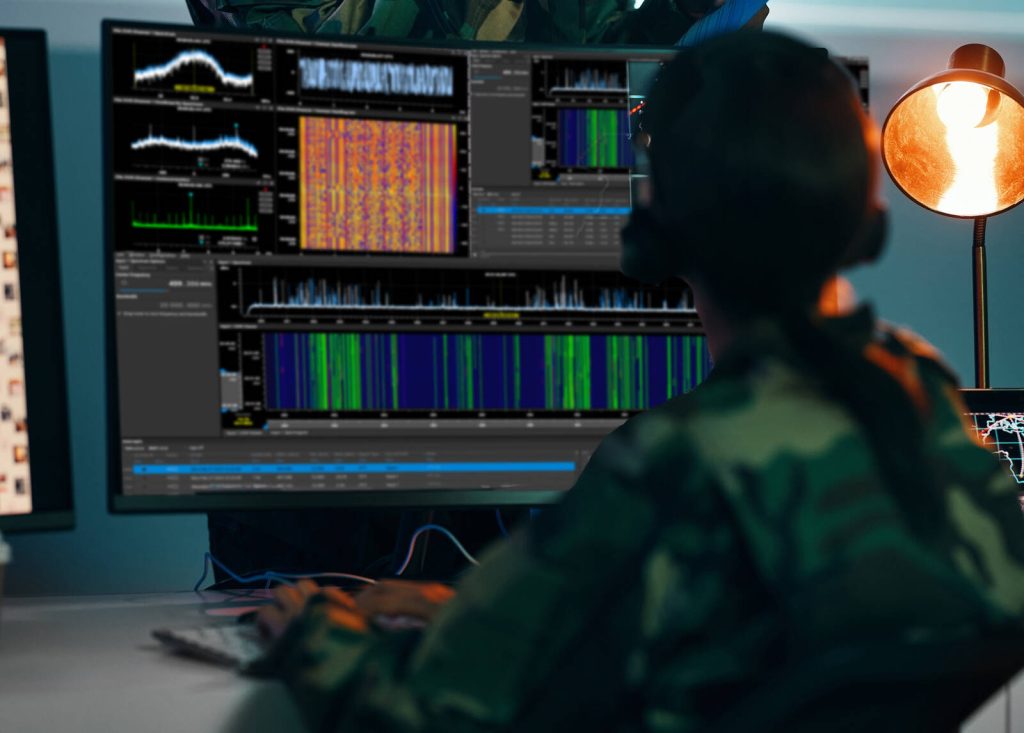
Government employed individuals who want to gain an understanding of Sceptre capabilities for signals and communications analysis, including electronic warfare capabilities.

This includes signals analysts responsible for intercepting and examining communications, and cybersecurity professionals working on electronic surveillance and threat detection. Military and government personnel engaged in electronic warfare, reconnaissance, or intelligence missions. Law enforcement officers involved in surveillance and investigative activities that require analyzing electronic communications are likewise appropriate candidates.

These courses are tailored towards those supporting signals and communication analysis, surveillance, and intelligence operations

Technical & Signals security Countermeasures

​The courses in this catalog are tailored for students interested in gaining an understanding of Sceptre capabilities for use in Technical Surveillance Countermeasures (TSCM), TEMPEST, In-place monitoring (IPMS), and Wireless Intrusion Detection (WIDS).​

TSCM refers to techniques and measures to detect, neutralize, and exploit a wide variety of technologies used to obtain unauthorized access to classified national security information, restricted data, and/or sensitive but unclassified information.

TEMPEST refers to technical investigations and studies of compromising emanations from electronic and data processing equipment.

In-Place Monitoring (IPMS) refers to long-term persistent RF threat monitoring techniques used to detect and neutralize a wide variety of RF signal technologies used to obtain unauthorized access to classified national security information, restricted data, and/or sensitive but unclassified information.

Wireless Intrusion Detection Systems (WIDS) refers to wireless survey techniques used to monitor specific parts of the RF spectrum to identify unauthorized wireless, protocol based, transmissions and/or activities

Training Course Overviews

3dB Training Course Overview

Fundamentals

Full Spectrum Awareness and Triage (FSAT)

Our flagship course, the 10-day FSAT course prepares tactical operators to master the electromagnetic spectrum through a progressive, hands-on curriculum.

Kirby & Sceptre Remote Operations (KSRO)

This course introduces the configuration and management of distributed sensor networks using Kirby and Sceptre systems.

Tactical ELINT (TE)

This five-day tactical electronic intelligence (ELINT) course introduces students to the core principles and operational techniques used to detect, parameterize, and analyze radar emissions.

Communications Intelligence Fundamentals (COMINT)

This five-day course provides a comprehensive introduction to the principles and practices of Communications Intelligence (COMINT).

Advanced

OUSF 301 / Advanced

3-day course specifically designed to teach principles needed to survey infrared, visible, ultraviolet, and ultrasonic spectrum for surveillance and network threats. Students will learn the basics of what these modalities are, where they are in the spectrum, and how to use Sceptre to automate use of the DJM SS 3d Sensor to detect and demodulate optical and acoustic threats.

IPSF 302 / Advanced

3-day course specifically designed to teach principles needed to understand and survey worldwide powerline systems. Students will learn the basics or residental and commercial power systems, as well as how to use Sceptre to automate use of the DJM SS iPLA to detect and demodulate threats across multi-phase power systems.

ROTS 303 / Advanced

3-day course aimed as using Sceptre for remotely for TSCM and Inplace conferencing. Students will learn the basics of Linux and networking as well as how to configurate Sceptre for remote use. Students are exposed to core TSSC concepts such as remote full sweep setup, masking, and anomaly detection, signal triage and analysis, and signal recovery.

AVAR 304 / Advanced

3-day course specifically focused on passive recovery of analog video signals. In this course, student will learn how to use a variety of Sceptre plugins to quickly obtain measurements needed for recovery of video signals of interest. Students will learn how to beamform and use multi-stream video averaging for low-SNR recovery of video signals.

SHDF 305/ Advanced

3-day course that will offer students the ability to find signals present in their environment, evaluate it for concern, and then use Sceptre to locate that signal source. The concepts used in the course will be primarily focused inside a facility or structure.

ANFD 306 / Advanced

3-day course designed to offer students an understanding of antennas, polarization, transmission lines, gain, efficiency, connectors, and their specific uses. Students will learn how to evaluate an antenna for their needs and determine key equipment to consider.

Technical & Signals Security Countermeasures

Advanced

OUSF 301 / Advanced

3-day course specifically designed to teach principles needed to survey infrared, visible, ultraviolet, and ultrasonic spectrum for surveillance and network threats. Students will learn the basics of what these modalities are, where they are in the spectrum, and how to use Sceptre to automate use of the DJM SS 3d Sensor to detect and demodulate optical and acoustic threats.

IPSF 302 / Advanced

3-day course specifically designed to teach principles needed to understand and survey worldwide powerline systems. Students will learn the basics or residental and commercial power systems, as well as how to use Sceptre to automate use of the DJM SS iPLA to detect and demodulate threats across multi-phase power systems.

ROTS 303 / Advanced

3-day course aimed as using Sceptre for remotely for TSCM and Inplace conferencing. Students will learn the basics of Linux and networking as well as how to configurate Sceptre for remote use. Students are exposed to core TSSC concepts such as remote full sweep setup, masking, and anomaly detection, signal triage and analysis, and signal recovery.

AVAR 304 / Advanced

3-day course specifically focused on passive recovery of analog video signals. In this course, student will learn how to use a variety of Sceptre plugins to quickly obtain measurements needed for recovery of video signals of interest. Students will learn how to beamform and use multi-stream video averaging for low-SNR recovery of video signals.

SHDF 305/ Advanced

3-day course that will offer students the ability to find signals present in their environment, evaluate it for concern, and then use Sceptre to locate that signal source. The concepts used in the course will be primarily focused inside a facility or structure.

ANFD 306 / Advanced

3-day course designed to offer students an understanding of antennas, polarization, transmission lines, gain, efficiency, connectors, and their specific uses. Students will learn how to evaluate an antenna for their needs and determine key equipment to consider.

ABOUT US

Our Expert Instructors

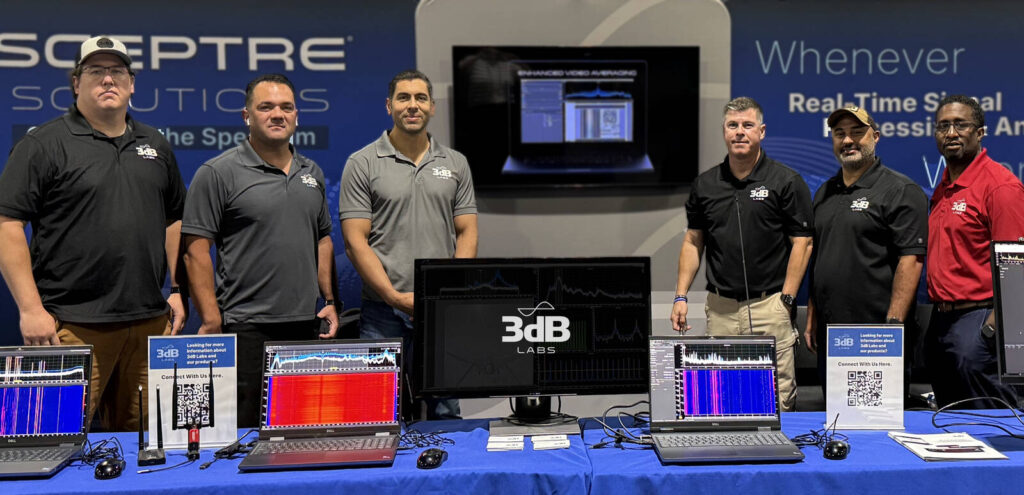
With over 80 years of combined military and counterintelligence experience, our team is highly skilled and recognized as the foremost experts in operating Sceptre. Our instructors all hold national TSCM certification, advanced degrees, and bring to the table years of operationally relevant Department of Defense (DoD) and Intelligence Community (IC) experience.